
Table of Contents >> Show >> Hide
- Before You Pick a Color: What Roses Need to Thrive
- 10 Colored Roses You Can Grow
- How to Choose the Right Rose Color for Your Garden (Without Regret)
- Quick Rose Care Tips for Longer Bloom and Fewer Problems
- Common Mistakes When Growing Colored Roses
- Final Thoughts
- Gardener Experiences with Colored Roses (Extended Notes)
Generated with GPT-5.2 Thinking (GPT-5 family)
If your garden currently looks like a polite committee meeting of green shrubs, roses can fix that fast. And no, you do not need to become a full-time “rose person” who speaks in pruning diagrams and carries special gloves like a superhero. Modern roses come in a huge range of colors, growth habits, and fuss levelsmeaning you can absolutely grow a rose that matches your style, climate, and tolerance for weekend chores.
This guide covers 10 colored roses you can grow, plus practical tips for choosing the right type, keeping blooms coming, and avoiding the classic rose drama (black spot, mildew, and the mysterious “why are my leaves yellow?” moment). Whether you want bold red blooms, soft apricot tones, or striped petals that look like they dressed for a party, there is a rose for you.
Before You Pick a Color: What Roses Need to Thrive
Let’s start with the unglamorous part that makes the glamorous part possible. Most roses perform best with:
- Full sun (at least 6 hours daily; morning sun is especially helpful)
- Well-drained soil (roses hate “wet feet” more than soggy socks)
- Good air circulation to reduce disease pressure
- Deep watering at the base instead of frequent shallow sprays
- Annual pruning to maintain vigor, shape, and airflow
For best results, also choose varieties suited to your USDA hardiness zone and your local conditions (hot and humid, hot and dry, cold winters, coastal moisture, etc.). Many modern breeders and nurseries now let you filter roses by color, climate, disease resistance, and zone, which makes shopping a lot less like online dating and a lot more like actual horticulture.
10 Colored Roses You Can Grow
These color categories are practical, widely available, and garden-friendly. Under each one, you’ll find style notes and grower tips, plus examples of rose lines and cultivars commonly sold in the U.S.
1) Red Roses
Best for: Classic curb appeal, romantic borders, dramatic focal points
Red roses are the all-time crowd favorite for a reason: they read beautifully from a distance and look stunning against green foliage. If you want a strong, traditional rose color that works in both formal and cottage-style gardens, red is the easiest “yes” on the list.
What to grow: Red shrub roses (including popular landscape types), hybrid teas for cut flowers, or repeat-blooming floribundas for clusters of color. Modern landscape roses are especially useful if you want dependable bloom cycles without a high-maintenance routine.
Design tip: Pair red roses with silver foliage plants, white annuals, or dark purple salvias for a crisp, high-contrast look.
2) Pink Roses
Best for: Cottage gardens, soft borders, mixed perennial beds
Pink is the king (or queen) of versatility. From hot pink to shell pink and blush, pink roses can look sweet, elegant, or surprisingly modern depending on what you plant around them. Pink also tends to blend more easily than red in mixed-color gardens.
What to grow: Shrub roses for landscape impact, grandifloras or hybrid teas if you want long stems, and compact roses for containers. Many pink roses repeat bloom well and carry a soft, classic rose fragrance.
Design tip: Layer pink roses with lavender, catmint, and white gaura for a soft “I definitely planned this” look.
3) Yellow Roses
Best for: Brightening dark corners, cheerful foundation beds, summer color themes
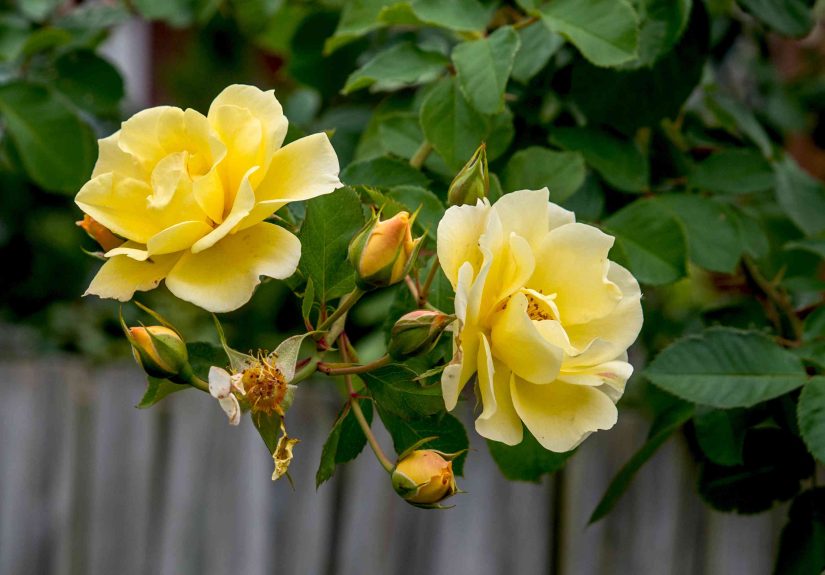
Yellow roses bring instant energy to a garden. They are especially useful in landscapes that need a visual liftnear evergreens, fences, or neutral stonework. A yellow rose can function like sunlight on a stem, and frankly, some gardens need exactly that.
What to grow: Disease-resistant shrub roses or floribundas if you want long bloom periods and easier care. Yellow can range from pale butter to rich gold, so check plant photos across multiple bloom stages before buying.
Design tip: Combine yellow roses with blue flowers (salvia, delphinium, or annual lobelia) for a classic color-wheel win.
4) White Roses
Best for: Moon gardens, elegant landscapes, wedding-style beds, small spaces
White roses are clean, timeless, and surprisingly useful in landscape design. They visually “cool down” hot color schemes and glow in evening light. They also make other colors look more intentionallike punctuation marks for your flower bed.
What to grow: White shrub roses for low-fuss bloom power, climbers for arbors and fences, or container-friendly compact roses where you want a polished look near an entryway.
Design tip: Plant white roses near patios or walkways where you can enjoy the flowers in early morning or dusk.
5) Orange Roses
Best for: Warm palettes, bold containers, sunset-themed gardens
Orange roses are excellent if you want color that feels lively but less formal than red. They range from true orange to coppery tones and can look especially striking in late-afternoon sun.
What to grow: Floribundas and landscape shrub roses are great choices for repeated flower flushes. In hotter climates, orange roses can be spectacular, but protect them from reflected heat off walls if your site bakes in summer.
Design tip: Pair with burgundy foliage, ornamental grasses, or apricot roses for a warm gradient effect.
6) Coral Roses
Best for: Transitional color schemes, tropical-style gardens, friendly front yards
Coral sits in that magical zone between pink, orange, and salmonso it plays well with almost everything. If you can’t decide whether you want “bright” or “soft,” coral says, “Why not both?”
What to grow: Repeat-blooming landscape roses and compact shrub roses. Coral shades often perform well as accent plants because they stand out without overwhelming nearby flowers.
Design tip: Use coral roses to bridge pink and orange plantings in the same bed.
7) Peach & Apricot Roses
Best for: Romantic gardens, neutral palettes, modern farmhouse landscaping
Peach and apricot roses have become favorites because they feel fresh, sophisticated, and easy to style. They pair beautifully with cream, soft yellow, dusty blue, and sage-green foliage, which is why they show up everywhere from backyard gardens to event florals.
What to grow: Shrub roses, floribundas, or English-style roses with repeat bloom and fragrance. These shades often show color variation depending on temperature, so you may see deeper tones in cool weather and softer tones in heat.
Design tip: Add white and lavender companions to keep the palette airy and refined.
8) Purple & Lavender Roses
Best for: Collector gardens, moody color schemes, statement beds
If you want the “Wait… is that actually a rose?” reaction, purple and lavender roses deliver. These shades range from soft lilac to rich plum. True blue roses are still not a standard garden reality, so lavender and purple are the closest practical options for that cool-toned fantasy look.
What to grow: Floribundas, shrubs, and specialty roses selected for color and fragrance. Check disease resistance and climate fit carefully, since some purple roses are chosen for color first and toughness second.
Design tip: Place near silver foliage or pale stone to make purple tones pop. They can visually disappear in dark corners, so give them good light.
9) Cream, Ivory & Neutral-Toned Roses
Best for: Minimalist gardens, mixed shrub borders, elegant cut-flower gardens
Neutral-toned roses don’t scream for attentionand that is exactly their superpower. Cream, ivory, champagne, and soft beige tones can make a garden look expensive (without requiring you to refinance your mulch budget).
What to grow: Fragrant shrub and garden roses, especially if you want blooms for cutting. Neutral tones often combine beautifully with herbs, grasses, and soft perennials.
Design tip: Use these roses to soften bright gardens or build a calm monochrome palette.
10) Multi-Colored & Striped Roses
Best for: Conversation starters, eclectic gardens, collectors, patio containers
Some roses bloom with blended colors, contrasting petal edges, or striped petals that look hand-painted. These are perfect if your garden personality is “a little extra” (in the best way). They work especially well in spots where visitors can get close and admire the details.
What to grow: Floribundas, hybrid teas, and specialty garden roses. Many nurseries let you filter specifically for multi-colored or striped roses, which saves a lot of scrolling.
Design tip: Give striped roses simple companions so the blooms remain the star. A striped rose next to another striped flower can look like your garden is buffering.
How to Choose the Right Rose Color for Your Garden (Without Regret)
Match the color to the job
- Focal point: red, orange, purple
- Soft border filler: pink, apricot, cream
- Evening glow: white, pale yellow
- Collector wow-factor: striped, blended, lavender
Match the rose type to your maintenance level
If you love roses but not chores, start with landscape shrub roses and groundcover roses. Many modern series are bred for repeat blooming, strong color, and improved disease resistance. If you want florist-style stems and are willing to do more pruning and monitoring, hybrid teas and grandifloras may be worth it.
Match the plant to your climate
This matters more than color, and it is the difference between “lush blooms” and “crispy disappointment.” Use nursery filters for zone, heat/humidity tolerance, and disease resistance. In humid regions, black spot and Cercospora can be major issues; in dry hot areas, irrigation management and heat stress matter more.
Quick Rose Care Tips for Longer Bloom and Fewer Problems
- Water deeply, not daily: Keep soil evenly moist, especially in the first year. Aim water at the base.
- Avoid crowded planting: Airflow reduces humidity and disease pressure on leaves.
- Prune yearly: Remove dead, damaged, diseased, and crossing growth. Open-center structure improves air circulation.
- Clean up fallen leaves: Sanitation helps reduce overwintering disease pressure.
- Choose resistant varieties first: It is the easiest way to reduce spraying and stress.
- Monitor regularly: Check leaves, stems, and buds early so small problems do not become season-long headaches.
One underrated tip: don’t chase perfection. A few spotted leaves do not mean your rose career is over. Healthy roses can tolerate some cosmetic damage, and many home gardeners do better with good site selection, watering habits, pruning, and clean-up than with a complicated spray schedule.
Common Mistakes When Growing Colored Roses
1) Buying for color only
That dreamy purple bloom means nothing if the plant hates your climate. Always check zone and disease resistance.
2) Planting too close together
Those cute little nursery plants will grow. Future-you deserves airflow.
3) Watering the leaves every evening
Wet foliage + overnight humidity = disease party. Water earlier and at the base.
4) Skipping pruning completely
Roses do not need aggressive haircutting every weekend, but they do benefit from yearly pruning and cleanup.
Final Thoughts
Growing roses is a lot less intimidating when you stop trying to grow every rose and start choosing the right rose. Begin with a color palette you actually love, choose a rose type that matches your maintenance style, and prioritize disease resistance and climate fit. That formula will get you much farther than chasing the prettiest catalog photo.
If you are just starting out, pick two or three colorsmaybe one bold, one soft, and one neutraland build from there. Your garden will look cohesive, your care routine will stay manageable, and you’ll still get that spectacular “wow” factor roses are famous for. Also, you will absolutely stop in your driveway to admire them. It’s part of the deal.
Gardener Experiences with Colored Roses (Extended Notes)
One of the most useful things gardeners learn after a season or two is that rose color is not just about the flower photo on the tagit is about how that color behaves in real light, real weather, and real neighborhoods. For example, many people plant a bright red rose expecting a formal “estate garden” look, then discover it becomes the visual anchor for the whole front yard. That can be fantastic, but it also means nearby plants need to support it instead of competing with it. A lot of gardeners end up moving companion plants, not the rose, because once the red blooms start repeating, they realize the rose is the star and everything else is backup vocals.
Pink and apricot roses create a different experience. Gardeners often say these tones are easier to live with over time because they blend with seasonal changes. Spring bulbs fade, summer perennials take over, and pink or apricot roses still look like they belong. These colors also tend to photograph beautifully, which sounds trivial until you realize half the joy of gardening is sending pictures to family and pretending your backyard “just happened” to look amazing. In many home gardens, soft colors are the ones that make the entire bed look calm and intentional, even when there is a rogue tomato stake nearby.
Yellow roses are often a surprise favorite. People buy them for cheerfulness, but they keep them because yellow reads well from a distance. Gardeners with longer driveways or larger lawns often report that yellow and white roses are the first blooms they can actually notice from the house. On the other hand, some discover that very hot sites can wash out pale yellows by mid-summer, so they switch to deeper gold shades or plant where morning sun is strong and afternoon sun is less harsh. That is a common rose-growing pattern: the first plant teaches the lesson, and the second plant benefits from it.
Purple and lavender roses inspire the strongest emotional reactions. Gardeners love them because they feel rare and dramatic, but they also learn quickly that placement matters. In shade or near dark fences, those blooms can visually disappear. In brighter spots with reflective stone, pale gravel, or silver foliage nearby, the same rose suddenly looks electric. Experienced growers often talk about this as “giving the rose a stage.” It is less about the plant itself and more about what surrounds it. Once you notice that, your whole garden design game levels up.
Another common experience is the shift from color obsession to plant-health obsessionin a good way. New gardeners tend to buy roses by bloom photo alone. After dealing with leaf spots, poor airflow, or a plant that sulks in wet soil, they start shopping differently: zone first, disease resistance second, color third. Ironically, that usually leads to better-looking gardens. When a rose is healthy, even a modest bloom color looks fantastic because the plant is full, leafy, and covered in repeat flowers. When a rose struggles, even the “perfect” color cannot save the overall look.
Finally, many gardeners discover that the best rose experience is not a single perfect specimenit is a small color collection. A red for drama, a white for glow, and a peach or pink for softness can completely change a space. Once those start blooming in cycles, the garden feels alive for months instead of one big spring moment. And yes, you may end up adding “just one more rose” next year. That is not failure. That is gardening.







 Close
Close