
Table of Contents >> Show >> Hide
- Why a Thrift Store LEGO Storage Makeover Works So Well
- What to Look for at the Thrift Store
- Tools and Materials You’ll Need
- Step-by-Step: Thrift Store Makeover to LEGO Storage System
- Best LEGO Organization Methods (and Who They’re Best For)
- Budget Example: “Looks Custom, Costs Less”
- Common Mistakes to Avoid
- Styling Ideas So the Setup Looks Intentional
- Conclusion
- Experience Journal: My Thrift Store LEGO Storage Makeover (500+ Words)
You know that magical moment when you walk into a thrift store “just to browse,” then lock eyes with a scratched-up cabinet that whispers,
“I could be useful again”? This project is for that moment. If your floor has become a surprise obstacle course of tiny bricks, this
thrift store makeover turns secondhand furniture into a smart, good-looking LEGO command center. It’s practical, budget-friendly, and honestly
way more fun than another beige plastic bin.
In this guide, you’ll learn how to choose the right thrifted piece, prep it safely, paint and customize it, and create a LEGO storage system
that actually gets used. We’ll cover sorting strategies, kid-friendly labeling, cleanup habits that don’t require superhero patience, and design
options that blend into your home instead of shouting “toy tornado lives here.” Whether you’re organizing a tiny apartment corner or a full playroom,
this DIY approach gives your bricks a home and your feet a chance at survival.
Why a Thrift Store LEGO Storage Makeover Works So Well
New storage furniture can get expensive fast. Thrifted furniture gives you better materials for less money, and in many cases, older pieces are sturdier
than flat-pack alternatives. A makeover lets you tailor every inch: drawer depth for bricks, open shelves for sorted bins, top surface for in-progress builds,
and even rolling casters if your “LEGO zone” moves around the house.
It also solves a classic organization problem: when storage is ugly or inconvenient, no one uses it. But if your setup is attractive, clearly labeled, and easy
to reach, cleanup stops feeling like punishment. You’re not just storing piecesyou’re designing a small system that supports creativity, independence, and less chaos.
What to Look for at the Thrift Store
1) Best furniture types for LEGO storage
- Low dressers: Great for drawers, easy access for kids, and a roomy top for builds.
- Nightstands with shelves: Perfect for compact spaces or bedside “mini build stations.”
- Bookcases/cubby units: Ideal for labeled bins and visual sorting.
- Media cabinets: Useful for hiding clutter behind doors while keeping sets dust-protected.
- Vintage wooden crates: Excellent add-ons for modular sorting or rolling under-table storage.
2) Quick quality checklist before you buy
- Check for wobble, loose joints, cracked corners, and missing hardware.
- Open every drawer fully. If it sticks badly, estimate repair time before buying.
- Smell test: strong mildew or smoke odor can be hard to remove.
- Look for water damage rings or swollen particleboard edges.
- Prefer solid wood or quality plywood when possible for longevity.
3) Safety checks you should never skip
- If the piece might be old, treat unknown paint carefully and test before aggressive sanding.
- Inspect secondhand upholstered items for pests; for LEGO storage, hard furniture is usually the safer bet.
- Use tip restraints on tall units if children will access them.
- Avoid broken magnets, loose batteries, or recalled toy parts in mixed thrift bins.
Tools and Materials You’ll Need
- Screwdriver set, drill/driver, wood glue
- Sandpaper (120 and 220 grit), tack cloth, filler putty
- Primer + paint (or stain + protective topcoat)
- Clear bins, divided containers, zipper pouches, label maker
- Drawer dividers, shelf risers, optional casters
- Safety gear: mask/respirator, gloves, eye protection
Pro tip: buy your bins first, then measure your furniture. Not all “medium bins” are medium in the same universe.
Step-by-Step: Thrift Store Makeover to LEGO Storage System
Step 1: Deep clean and de-gunk
Wipe down the entire piece with mild soap solution, then dry thoroughly. Remove old liner paper and vacuum crevices. For sticky residue, use a safe adhesive remover.
The cleaner your starting surface, the better your finish will look.
Step 2: Repair before beauty
Tighten screws, re-glue loose joints, and fill dents or hardware holes. If drawers slide poorly, inspect tracks and wax wooden runners lightly. Let filler dry completely
before sanding smooth. This is the unglamorous step that makes the glam step possible.
Step 3: Sand smart
Sand lightly with 120 grit to remove rough spots or peeling finish, then follow with 220 grit for a smooth paint-ready surface. Always sand with the grain on wood surfaces.
Wipe dust thoroughly; dust is the enemy of pretty paint.
Step 4: Prime and paint (or stain)
Apply primer for adhesion and durability, especially if the original finish is glossy. Then paint in thin coats. Two light coats almost always beat one thick coat.
Want a cleaner modern look? Choose one main color plus neutral bins. Want playful? Color-code drawer interiors by LEGO category.
Step 5: Add functionality upgrades
- Casters: Turn a cabinet into rolling storage.
- Soft-close bumpers: Reduce slamming and noise.
- Pegboard side panel: Hang mini tools, instruction sleeves, or small baskets.
- Top tray zone: Create a “current project” parking area.
Step 6: Build your sorting system
Use a two-level sorting approach:
- Primary sort: by piece type (plates, bricks, tiles, minifig parts, technic connectors).
- Secondary sort: by color or set, depending on your builder’s style.
Keep frequently used pieces at kid-height. Rare pieces can go higher up in labeled boxes.
Step 7: Label like your sanity depends on it
For younger kids, combine words + picture labels. For older builders, use precise labels (e.g., “2×4 plates,” “slope pieces,” “wheels/axles”).
Consistent labeling reduces “Where does this go?” negotiations by about 87%. (Unscientific, emotionally true.)
Best LEGO Organization Methods (and Who They’re Best For)
Method A: Sort by color
Great for casual builders and younger kids who identify colors quickly. Fast cleanup, simple logic, visually appealing bins.
Method B: Sort by piece type
Best for advanced builders who need exact parts quickly. Reduces build time and frustration during complex projects.
Method C: Sort by set
Useful for collectors or kids who repeatedly rebuild official sets. Use zipper pouches or small boxes with set numbers.
Method D: Hybrid system
Usually the best long-term solution: common pieces by type, specialty items by set, and overflow by color.
If your home has multiple LEGO fans, this method prevents storage gridlock.
Budget Example: “Looks Custom, Costs Less”
- Thrifted 3-drawer dresser: $35
- Sandpaper + filler + cleaner: $18
- Primer + paint + brush/roller: $36
- Six clear bins + four divided trays: $42
- Label tape + drawer dividers: $14
- Optional casters + anti-tip kit: $20
Total: about $165 for a custom-looking LEGO storage station.
Common Mistakes to Avoid
- Buying first, measuring later: always map bin sizes and drawer depth in advance.
- Skipping primer: paint chips sooner, especially on high-touch drawers.
- Over-sorting too early: start broad, refine categories after 2–3 weeks of use.
- No “active build” zone: unfinished projects scatter without a designated tray.
- Storage too high: if kids can’t reach it, they won’t use it.
- No maintenance routine: monthly reset keeps categories from collapsing into “random brick soup.”
Styling Ideas So the Setup Looks Intentional
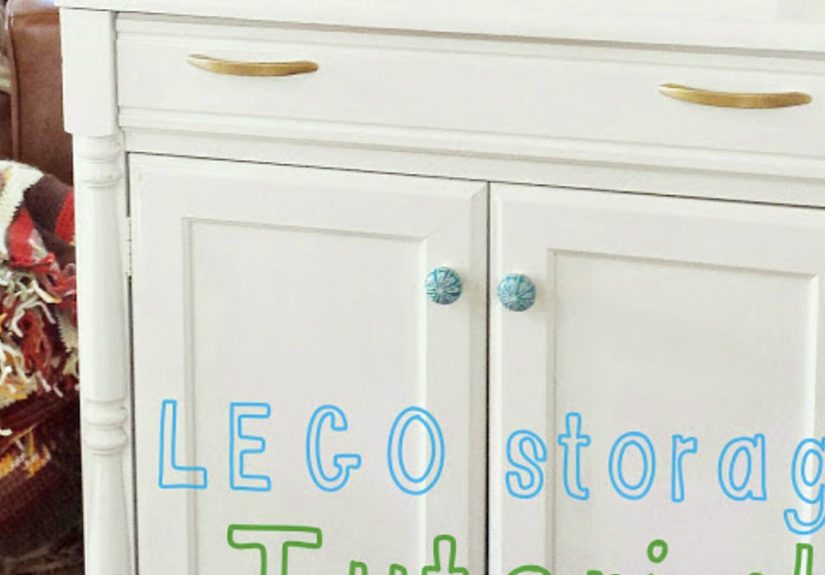
- Modern minimal: white cabinet, clear bins, black text labels.
- Vintage playful: sage or navy paint, brass pulls, woven baskets.
- Industrial: matte charcoal finish, casters, metal label holders.
- Scandi: light wood tone, neutral bins, soft pastel label accents.
Add one framed minifig display or a floating shelf for favorite builds. A little “show zone” makes the “put it away zone” easier to sell.
Conclusion
A thrift store makeover for LEGO storage is one of those rare projects that checks every box: affordable, practical, creative, and genuinely satisfying.
You rescue a useful piece of furniture, customize it for your real life, and create a system that reduces mess without killing fun. Better yet, this isn’t a
one-size-fits-all template. It can evolve as your builder growsfrom chunky beginner bins to detailed, part-level sorting for ambitious builds.
If your current setup is “a giant tub plus wishful thinking,” this is your sign to upgrade. Start simple, label clearly, and focus on easy daily reset habits.
You don’t need a showroom-perfect playroom. You need a system your household can keep using next week, next month, and next growth spurt.
Experience Journal: My Thrift Store LEGO Storage Makeover (500+ Words)
I started this project on a Saturday morning with coffee, optimism, and exactly zero confidence in my ability to pick “the right thrifted piece.” I had one goal:
stop stepping on LEGO bricks at 6:30 a.m. like it was part of an extreme sports competition. At the thrift store, I found a beat-up wooden nightstand-dresser hybrid
with three drawers and one weirdly charming brass handle. It looked rough, but the frame was solid, and all drawers opened. Sold.
Back home, I did the first cleaning pass and discovered a layer of mystery glitter that may have dated back to the early 2000s. I tightened screws, patched a dent,
and sanded while pretending I was on a renovation show where everyone has perfect lighting and matching tool belts. My version had a playlist, one glove, and a dog
that kept stealing sandpaper. Progress still happened.
Paint took two coats. I chose a deep blue for the outside and a soft gray inside the drawers. I wanted it to feel playful but still adult-friendly in the living room.
While the paint cured, I sorted bricks into broad categories on the floor: basic bricks, plates, mini figures, wheels, and “strange pieces nobody can name but everyone needs.”
That last category was unexpectedly large.
The biggest breakthrough was labels. I printed text labels first, and cleanup was still chaotic. Then I added tiny icons for younger helpers. Suddenly, everyone could put
pieces back without asking ten questions. It was such a small change, but it removed friction. Cleanup went from endless debate to a six-minute game with a timer and a playlist.
I also created a top “active build tray” so unfinished projects had a temporary home. Before that, half-built spaceships would migrate across the house like tiny plastic wildlife.
With the tray, builds stayed intact, and nobody felt like cleanup meant destroying creative work. That single feature made the whole system emotionally easier to use.
Week one was great. Week two was chaos. By week three, I realized the categories were too detailed, so I simplified them. That was an important lesson: organization is not a one-time
event; it’s a feedback loop. You watch how people actually use the system, then adjust. Once I switched to fewer, clearer categories, it finally clicked.
The hidden benefit? The room looked calmer. Even when there were bricks out, they felt “contained.” Friends started asking where I bought the storage cabinet, and saying
“It used to be a thrift store castoff” became my favorite humble brag. The whole makeover cost less than a new branded toy organizer and looked way better than I expected.
A month later, the setup still works. We do a 10-minute Sunday reset, check labels, and rotate one drawer if a category starts overflowing. That small routine keeps the system alive.
If I were doing it again, I’d buy two extra bins from day one and leave room for growth. LEGO collections never shrink; they multiply quietly at night.
Final verdict: this project is worth it. Not because it creates a perfect space, but because it creates a usable one. The bricks are easier to find, building is more fun, and cleanup
no longer feels like a punishment. Also, my feet are happier, which may be the most scientific success metric of all.






 Close
Close