
Table of Contents >> Show >> Hide
- How children’s books get banned (or “soft-banned”) in real life
- 10 stupidly banned children’s books (and the facepalm reasons behind the fuss)
- 1) And Tango Makes Three (Justin Richardson & Peter Parnell)
- 2) Captain Underpants series (Dav Pilkey)
- 3) Harry Potter series (J.K. Rowling)
- 4) In the Night Kitchen (Maurice Sendak)
- 5) James and the Giant Peach (Roald Dahl)
- 6) Where the Wild Things Are (Maurice Sendak)
- 7) Scary Stories to Tell in the Dark series (Alvin Schwartz)
- 8) A Wrinkle in Time (Madeleine L’Engle)
- 9) Bridge to Terabithia (Katherine Paterson)
- 10) The Wonderful Wizard of Oz (L. Frank Baum)
- The patterns hiding inside these “stupid” bans
- What to do instead of banning: a practical playbook
- Reader experiences: the “banned book” effect (and why it sticks with you)
- Conclusion: let kids readand let adults do the harder job
Childhood is supposed to be a magical time: learning to read, discovering new worlds, and realizing adults will argue about anythingincluding whether a
cartoon rabbit is “too rebellious,” or a penguin family is “too… penguin-y.”
In the U.S., most book “bans” aren’t federal agents kicking down doors to confiscate paperbacks. They’re usually local decisionssometimes a single school, a
single library branch, or a single committee meeting where someone says, “I’m not saying we should censor it, but also… can we censor it?”
This article looks at ten children’s books that have been challenged, restricted, or removed in ways that feel, frankly, goofy. Not because every complaint comes
from a cartoon villain twirling a mustachemany parents truly want to protect kidsbut because the reasoning often reveals a deeper truth: when people are anxious,
they’ll try to solve it with a ban instead of a conversation.
How children’s books get banned (or “soft-banned”) in real life
In book-censorship land, there’s a difference between challenged and banned. A challenge is an attempt to remove
or restrict a book (like requiring parental permission, moving it behind a desk, or pulling it from classroom sets). A ban is when the book
actually gets removed from access in that setting.
The key detail: the fight usually isn’t over whether the book should exist. It’s over whether other people’s kids should be allowed to read it.
That’s where the drama beginsand where logic sometimes takes a long lunch break.
10 stupidly banned children’s books (and the facepalm reasons behind the fuss)
1) And Tango Makes Three (Justin Richardson & Peter Parnell)
What it is: A picture book inspired by the real story of two male penguins who bond, nest, and raise a chick together in a zoo.
Why it got challenged: Objections often targeted the book for LGBTQ+ themesdescribed as “unsuited” for kids or conflicting with certain religious
viewpoints. The irony is almost self-writing: it’s penguins. Literally penguins doing parenting.
Why the ban logic doesn’t hold up: Kids already understand families come in different shapessingle parents, grandparents raising kids, blended
families, adoptive families. The book doesn’t lecture; it simply shows care, routine, and belonging. If your child can handle the concept of a talking train,
they can handle the concept of a nontraditional family.
- Conversation starter: “What do you think makes a family a family?”
- Kid takeaway: Love, care, and showing up matter more than matching a template.
2) Captain Underpants series (Dav Pilkey)
What it is: A wildly popular series featuring pranksters, potty humor, and a superhero in his underwearbasically a middle-school giggle
compiled into a book format.
Why it got challenged: Complaints include “encouraging disruptive behavior,” “bad role modeling,” “offensive language,” and being “unsuited to age.”
In some cases, particular titles were targeted for including same-sex couples.
Why the ban logic doesn’t hold up: The series is frequently a gateway to reading for kids who don’t feel like “book kids.” Also, the idea that
banning a fart joke prevents misbehavior is adorable. Children do not learn chaos from books. Children arrive preloaded with chaos.
- Conversation starter: “Why do you think humor is in stories?”
- Kid takeaway: Reading can be funand fun reading still counts as reading.
3) Harry Potter series (J.K. Rowling)
What it is: A fantasy series about magic, friendship, courage, and one boy’s long, exhausting academic career at a school with questionable
safety policies.
Why it got challenged: Objections often claimed the books promote witchcraft, the occult, or “evil.” In plain terms: some readers treated
fictional spells as a gateway drug to sorcery.
Why the ban logic doesn’t hold up: Fantasy is a longstanding way kids practice moral reasoning: temptation, loyalty, sacrifice, choosing right
over easy. If a child can distinguish “pretend” in superhero movies, they can distinguish it in a wizard book.
- Conversation starter: “Which character made the bravest choiceand why?”
- Kid takeaway: Power without integrity is dangerous; friendship matters; courage is a habit.
4) In the Night Kitchen (Maurice Sendak)
What it is: A dreamy picture book in which a boy named Mickey tumbles into a surreal bakery world.
Why it got challenged: Mickey is briefly nude in some illustrations. That’s it. That’s the whole scandal. Over the years, some adults even drew
diapers onto the pictures or pushed to remove the book.
Why the ban logic doesn’t hold up: The book’s nudity is nonsexual and childlikemore “bath time” than “anything remotely inappropriate.” The
bigger risk to reality is that the kid nearly gets baked into cake batter, yet the controversy tends to focus on… anatomy.
- Conversation starter: “What parts felt silly, scary, or dreamlike?”
- Kid takeaway: Dreams can be weirdand that’s part of storytelling.
5) James and the Giant Peach (Roald Dahl)
What it is: A boy escapes cruel guardians via an absurd adventure with giant insects inside a giant peach. It’s imaginative, darkly funny,
and a little grossclassic Dahl.
Why it got challenged: Some challenges cite “witchcraft,” “inappropriate language,” or being too scary. In one especially legendary case,
the objection was reportedly triggered by the presence of the word “ass.”
Why the ban logic doesn’t hold up: Context matters. Kids can learn that words have tone, timing, and appropriateness without pretending the word
doesn’t exist. Also, if we’re banning books because a peach contains questionable decisions… we may need to have a serious talk with the produce aisle.
- Conversation starter: “Why do you think the story uses exaggerated villains?”
- Kid takeaway: Imagination can be a lifeline; cruelty shouldn’t get the last word.
6) Where the Wild Things Are (Maurice Sendak)
What it is: A picture book where Max, sent to his room, journeys to an island of wild creatures and processes big feelings.
Why it got challenged: Some objections labeled it too dark, too scary, or pointed at supernatural elements. In other words: a story about a kid
having big emotions was accused of… giving kids big emotions.
Why the ban logic doesn’t hold up: The book is basically emotional literacy in a monster costume. It tells kids: anger happens, imagination helps,
and love waits when you come back. That’s not harmfulit’s developmentally smart.
- Conversation starter: “What do the Wild Things represent to you?”
- Kid takeaway: Feelings aren’t bad; what you do with them matters.
7) Scary Stories to Tell in the Dark series (Alvin Schwartz)
What it is: Folktales, urban legends, and creepy campfire-style stories, often remembered as a childhood rite of passage.
Why it got challenged: Concerns typically focus on violence, horror, nightmares, and disturbing illustrations. This one is at least honest:
“It’s scary” is a reasonable description of a book titled Scary Stories.
Why the ban logic doesn’t hold up: Fear in a controlled environment can help kids build resilience and learn boundaries (“Too scary for me right now”).
The better approach is age guidance, not pretending spooky stories are a modern invention. Humans have been telling scary tales since the first cave campfire.
- Conversation starter: “Which story felt fun-scary vs. not-for-you scary?”
- Kid takeaway: You get to set your own comfort leveland step back when needed.
8) A Wrinkle in Time (Madeleine L’Engle)
What it is: A science-fantasy classic about Meg Murry traveling through space and time to rescue her father, facing darkness with love and
intellect.
Why it got challenged: Complaints have included claims that it encourages occult practices or conflicts with certain religious beliefssometimes
because characters have witchy-sounding names or tools like a crystal ball.
Why the ban logic doesn’t hold up: The book is famously hard to pin downwhich is part of its genius. It blends science, philosophy, and faith
references while insisting love is a real force. Some readers complained it wasn’t Christian enough; others complained it was too Christian. If a book annoys
everyone equally, it might be doing something interesting.
- Conversation starter: “How does Meg grow into her strength?”
- Kid takeaway: Intelligence and empathy can coexistand both matter.
9) Bridge to Terabithia (Katherine Paterson)
What it is: A novel about friendship, imagination, and griefoften remembered as “the one book that made the whole class cry.”
Why it got challenged: Profanity complaints (including religious exclamations like “Oh, Lord”), and sometimes accusations involving “witchcraft”
or “occult” themesdespite the magic being almost entirely imaginative play.
Why the ban logic doesn’t hold up: This book helps kids name real experiences: loss, guilt, anger, and the comfort of friendship. It’s not
pushing darkness; it’s giving kids a flashlight. Banning it because a character blurts “Oh, Lord” is like banning seatbelts because the instructions include
the word “crash.”
- Conversation starter: “How do the characters cope with hard feelings?”
- Kid takeaway: Grief is real, and you don’t have to face it alone.
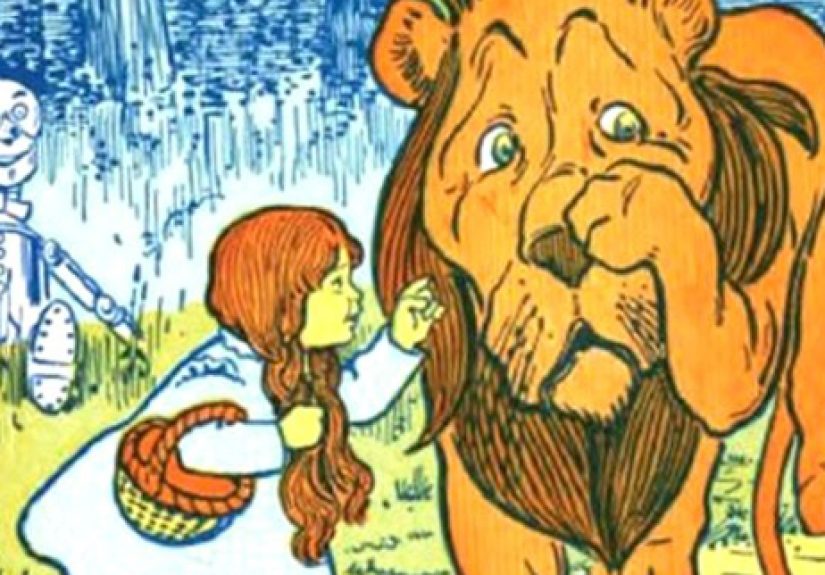
10) The Wonderful Wizard of Oz (L. Frank Baum)
What it is: Dorothy, a tornado, a road paved with questionable safety standards, and a cast of characters discovering courage, brains, and heart.
Why it got challenged: In one high-profile dispute, critics objected to the depiction of a “good witch” and the idea that traits like courage and
compassion are developed rather than strictly God-given.
Why the ban logic doesn’t hold up: If your worldview can’t survive a fictional witch being nice, the witch may not be the problem. The deeper
themethat people can grow into better versions of themselvesis one of the healthiest messages children can absorb.
- Conversation starter: “What changes each character the mostmagic or choices?”
- Kid takeaway: Growth is possible; bravery and kindness are learnable skills.
The patterns hiding inside these “stupid” bans
When you line these stories up, the reasons repeat like a stuck playlist:
- Magic panic: Anything witch-adjacent becomes suspicious, even when the “magic” is metaphor, imagination, or fantasy.
- Behavior anxiety: Adults fear kids will copy what they read, as if children are empty USB drives waiting to be loaded with prankster software.
- Body discomfort: Nonsexual nudity or basic biology triggers intense adult reactionsoften louder than reactions to violence or cruelty.
- Big-feelings avoidance: Stories that include grief, anger, or fear get labeled “too much,” even though kids already feel those emotions.
- Family politics: Books showing nontraditional families get treated as propaganda rather than simple representation of real life.
What’s missing from most challenges is the simplest question: What does my child actually need? Sometimes it’s guidance. Sometimes it’s context.
Sometimes it’s, “Let’s read it together and talk.” Bans try to replace parenting with a padlock.
What to do instead of banning: a practical playbook
For parents
- Read it first. Not the rumor, not the screenshotactually read the book.
- Use “not yet” instead of “never.” Your family can choose timing without choosing censorship for everyone.
- Talk in specifics. “This part worries me, and here’s why” beats “This book is bad.”
For teachers and librarians
- Offer opt-outs, not wipeouts. Alternate reading options solve many conflicts without restricting access for all.
- Keep policies clear. Transparent reconsideration procedures reduce panic-driven decisions.
- Teach media literacy early. Kids can learn the difference between fiction, metaphor, and persuasion.
Reader experiences: the “banned book” effect (and why it sticks with you)
Ask enough adults about banned children’s books and you’ll hear a strangely consistent memory: the first time they realized a book could be “dangerous” in the
eyes of grown-ups. Not dangerous like a loose stair railingdangerous like an idea.
Sometimes it starts innocently. A kid notices a label on a library display: Banned Books Week. The phrase lands like a dare. Banned? By who?
For what? The child doesn’t hear “restricted access.” The child hears “secret level unlocked.”
A lot of people remember the exact moment their curiosity ignited: a teacher quietly sliding a “controversial” title onto the desk with a look that says,
Read closely. Or a librarian explaining, patiently and without drama, that some books get challenged because not everyone agrees on what kids should read.
That calm explanation does something powerful: it turns censorship from a mysterious authority into a human decisionone you can question.
For some readers, the experience is emotional, not rebellious. A student who feels different sees a family like theirs in a picture book for the first time and
realizes, “Oh. I exist in stories, too.” Another kid, dealing with grief, finds Bridge to Terabithia and finally has language for the tornado inside
their chest. A nervous child discovers scary stories and learns that fear can be faced in small, safe dosesclosing the book when it’s too much, laughing the
next day when the sun is up.
And then there’s the adult experienceoften messier and, frankly, funnier in hindsight. A parent reads a complaint online and pictures a book as some kind of
literary monster. Then they read the actual pages and find… a penguin family. Or a boy in a dream. Or a witch who is kind. Or a magical place that turns out to
be a metaphor for imagination and resilience. The “scandal” shrinks. The temperature drops. The parent’s real fear becomes visible: not the book, but the loss of
control that comes with a child becoming their own thinker.
Many librarians have their own collection of storieshalf exhausting, half absurd. The meeting where someone insists a fantasy novel is an instruction manual.
The request to move a book “out of sight” even though the catalog still lists it (the censorship equivalent of hiding vegetables under the mashed potatoes).
The moment a teen asks, sincerely, “If this book is banned, can I check it out twice?”
Over time, those experiences tend to produce one of two outcomes. Some people learn to fear books more. But a surprising number learn the opposite: that reading is
how you practice freedom. You encounter ideas, you test them, you keep what’s wise, and you reject what isn’t. That’s not corruption. That’s growing up.
In other words, the most memorable thing about a banned children’s book often isn’t the contentit’s the lesson the controversy teaches:
someone, somewhere, thinks your mind is worth controlling. Once you notice that, you never un-notice it.
Conclusion: let kids readand let adults do the harder job
If you zoom out, these ten titles aren’t scary because they’re immoral; they’re scary because they’re effective. They help kids process emotions, imagine
possibilities, recognize different kinds of families, and think critically about good and evil. That’s the actual power of children’s literatureand it’s why
censoring it is such a tempting shortcut.
The better path is boring in the best way: read together, talk honestly, set age-appropriate boundaries in your own home, and leave room for other families to do
the same. Because in a healthy society, the solution to “I don’t like that book” isn’t “No one can read it.” It’s “Let’s discuss it.”




 Close
Close