

Table of Contents >> Show >> Hide
- Meet the Foe: What “Misinformation” Actually Means
- Why This Foe Feels “Modern” Even Though It’s Ancient
- Time Travel Stop #1: The Ancient WorldRumors as Social Currency
- Time Travel Stop #2: The Printing PressWhen Copy/Paste Got Invented
- Time Travel Stop #3: The 19th CenturyYellow Journalism and the Business of Sensation
- Time Travel Stop #4: The Broadcast AgeRadio and TV Make It Feel Real
- Time Travel Stop #5: The InternetThe Era of Infinite Publishing
- Welcome to Now: The Very Modern Foe Gets AI Upgrades
- Why We Fall for It: The Brain’s Greatest Hits
- The Anti-Misinformation Toolkit: How to Fight Back (Without Becoming a Robot)
- How Communities Win: Beyond Individual Fact-Checking
- So…What’s the Point of This Time Trip?
- Experiences: Traveling the Timeline With Misinformation (A 500-Word Travelogue)
- Conclusion
Imagine you’ve built a time machine. Not the clunky, spark-shooting kind that needs a lightning boltmore like a sleek app with a “Do Not Update Automatically” button (because updates always happen right when you’re about to save the universe).
You’re ready to explore history. You want to see pyramids being built, hear Shakespeare workshop a banger of a soliloquy, and maybe check if medieval bread was truly as dense as a Wi-Fi password.
But the moment you step into the timeline, you meet a foe that feels very modern: misinformationand its more deliberate cousin, disinformation. It’s the shape-shifter of every era, wearing whatever outfit the technology of the day provides. Today, it’s got a new wardrobe: AI-generated deepfakes, voice cloning, bot amplification, and algorithmic turbo-boosts.
This is a journey through time, yesbut also a guide to understanding what we’re up against now, why it works, and how to fight back without turning into the person who yells “FACT CHECK!” at their family group chat every Thanksgiving.
Meet the Foe: What “Misinformation” Actually Means
Before we chase anything through history, we should label it correctlybecause naming a villain matters. Many public agencies and research groups distinguish between:
- Misinformation: false or inaccurate information shared without intending harm (think: “My aunt shared it because she cares”).
- Disinformation: false information created and shared on purpose to mislead or manipulate (think: “Someone made this to steer opinions, sell something, or cause chaos”).
- Malinformation: genuine information used in a harmful or misleading context (think: “true, but weaponized”).
That last one matters because modern “information warfare” often isn’t just about fabricating realityit’s about reframing reality to provoke fear, anger, or tribal loyalty. And as public health agencies have emphasized, misinformation isn’t newbut it becomes extra dangerous when it disrupts decisions that require broad public trust and cooperation.
Why This Foe Feels “Modern” Even Though It’s Ancient
If misinformation has been around forever, why does it feel like it’s doing cardio and drinking electrolytes in 2026?
1) Scale: It’s not a rumor anymoreit’s a wildfire with a megaphone
In older eras, falsehoods spread through word-of-mouth, pamphlets, or newspapers. Today, a claim can reach millions in minutes, often propelled by engagement-driven systems that reward outrage and novelty.
2) Speed: There’s no “wait for tomorrow’s paper” moment
Modern misinformation moves at the speed of scrolling. By the time a correction arrives, the original post has already been screenshot, reposted, stitched, and turned into a reaction video.
3) Personalization: Everyone gets a custom-built version of reality
Algorithms can feed different groups different narratives, which means two people can live in the same city and still feel like they’re in two separate timelines. This is one reason agencies that focus on critical infrastructure and public resilience warn that information manipulation can undermine trust and civic stability.
4) Realism: “Seeing is believing” is no longer safe
Deepfakes and AI voice cloning are the villain’s newest superpowers. The FTC has warned that scammers can use voice cloning to impersonate loved ones or authority figures and push victims into urgent decisionsexactly the kind of scenario where our brains are most likely to skip verification.
Time Travel Stop #1: The Ancient WorldRumors as Social Currency
Step back into ancient societies and you’ll find misinformation thriving in its natural habitat: human conversation. When information is scarce, the person with “the news” becomes powerful. Rumors about leaders, wars, disease, or divine signs could travel quickly along trade routes, marketplaces, and military camps.
The mechanics are familiar: emotion beats accuracy, and stories that confirm group identity spread faster than stories that require patience. In other words, even without Wi-Fi, humans were already excellent at “sharing without reading the article.”
Time Travel Stop #2: The Printing PressWhen Copy/Paste Got Invented
When printed materials became easier to produce, information spread more widelyand so did false claims. Pamphlets and broadsides made it possible to distribute persuasive narratives at a scale previous eras couldn’t match.
One long-running theme emerges: every major communications leap (printing press, radio, television, internet, social media) expands access to information and expands access to manipulation.
Time Travel Stop #3: The 19th CenturyYellow Journalism and the Business of Sensation
Fast-forward to the late 1800s and you run into the original “clickbait,” except it wasn’t clicksit was newspaper sales. Sensational coverage and exaggerated headlines competed for attention, sometimes blurring the line between reporting and spectacle.
Educators at the Library of Congress still use this era to help students connect historic media manipulation to modern misinformation ecosystems. The lesson: the tools change, but the incentives often stay the sameattention, profit, influence.
Time Travel Stop #4: The Broadcast AgeRadio and TV Make It Feel Real
When radio and television became dominant, misinformation gained something powerful: presence. A confident voice can create credibility. A polished broadcast can make a claim feel official even when it isn’t.
This era helped wire a crucial vulnerability into our minds: we often confuse production quality with truth. Today’s ultra-edited clips and AI-generated “news anchors” take that vulnerability and crank it up to 11.
Time Travel Stop #5: The InternetThe Era of Infinite Publishing
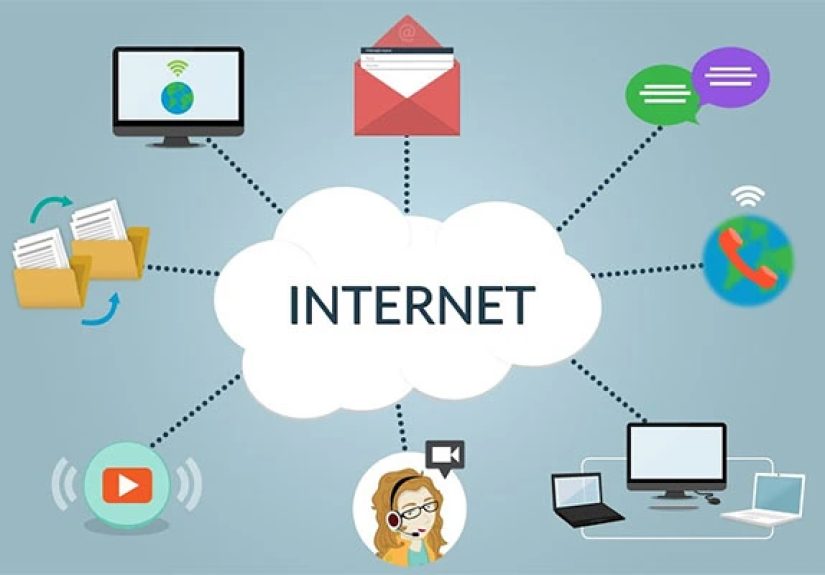
The internet made publishing nearly frictionless. That’s a gift for education and creativityand also a playground for manipulation. Social platforms turned every user into a distributor, and engagement systems can amplify the most emotionally charged content.
Research and public health guidance have stressed that misinformation becomes especially harmful when it disrupts health decisions, undermines trust in institutions, or spreads faster than corrections can catch up.
Welcome to Now: The Very Modern Foe Gets AI Upgrades
Here’s where the time machine stops feeling like a history tour and starts feeling like a cybersecurity briefing with better snacks.
Deepfakes: When “Video Proof” Isn’t Proof
Deepfakes use AI to generate or alter images and video in realistic ways. The problem isn’t just that deepfakes existit’s that detection is an arms race. The National Institute of Standards and Technology (NIST) supports media forensics research and evaluations that test how well detection systems perform across different kinds of synthetic media.
Voice Cloning: The Scam That Feels Personal
Voice cloning can mimic a person with surprisingly little audio. Scammers can stage a call that sounds like your boss, your parent, or your kid, then demand money or sensitive info “right now.” The FTC has published consumer guidance on fighting back against harmful voice cloning, and it’s a perfect example of a modern foe using modern tools to exploit ancient instincts: protect your people, obey authority, act fast.
Bots and Amplification: The Crowd That Isn’t a Crowd
In the past, a manipulator needed a printing press or a broadcast station. Now they can simulate consensus with automated accounts and coordinated posting. The goal is often psychological: make a claim appear popular, normal, or inevitable.
Why We Fall for It: The Brain’s Greatest Hits
Let’s be honest: if humans were naturally immune to misinformation, it wouldn’t keep winning awards for “Most Persistent Villain.” Psychology explains several reasons we’re susceptible:
- Confirmation bias: we favor claims that match what we already believe.
- In-group trust: we’re more likely to believe information from “our people.”
- Repetition effect: familiar claims can feel truer simply because we’ve heard them before.
- Emotion shortcuts: fear, anger, and disgust can override slow, careful evaluation.
Organizations like the American Psychological Association have explained how these mental shortcuts can make falsehoods “stick,” especially when they’re wrapped in identity, outrage, or urgency.
The Anti-Misinformation Toolkit: How to Fight Back (Without Becoming a Robot)
Good news: you don’t need a PhD in information science to get better at spotting manipulation. You need a few habits that scale with modern life.
Use SIFT: A Fast, Practical Method
Librarians and educators often recommend the SIFT method for evaluating information online:
- Stop: pause before you share or react.
- Investigate the source: who is behind it? What’s their track record?
- Find better coverage: check reliable outlets or primary sources.
- Trace claims to the original: where did the quote, image, or statistic come from?
It’s simple on purpose. In the real world, “simple” is what survives when you’re tired, busy, and three notifications deep.
Practice Lateral Reading: Leave the Page
Instead of staying on one site and analyzing it like a specimen, open new tabs. See what trusted sources say about the publisher, the claim, and the context. Stanford researchers and educators have found that even short instruction can meaningfully improve how people evaluate online informationproof that media literacy is teachable, not mystical.
Slow Down the “Urgency Trap”
Modern scams and disinformation often rely on urgency: “Do this right now,” “Share before it’s deleted,” “They don’t want you to know.” Treat urgency as a red flag, not a call to action.
Verify Identity the Old-Fashioned Way
For voice cloning and impersonation scams:
- Hang up and call back using a known number.
- Use a family “safe phrase” for emergencies.
- Ask a question only the real person would answer correctly.
This is not paranoia. It’s basic digital seatbelt behavior.
Build a “Reliable Source Muscle”
When the topic is health, safety, elections, or money, prioritize high-quality sources such as major medical institutions, academic centers, and government agencies. Public health guidance emphasizes assessing credibility and cross-checking claimsespecially in high-impact situations.
How Communities Win: Beyond Individual Fact-Checking
Misinformation isn’t just an individual problem; it’s a systems problem. Health agencies and security organizations emphasize strategies like:
- Prebunking: teaching people common manipulation tactics before they encounter them.
- Rapid response: addressing viral falsehoods quickly with clear, repeatable messaging.
- Trusted messengers: partnering with local leaders and community organizations who already have credibility.
- Platform awareness: understanding where a claim is spreading and why it’s gaining traction.
In other words: the opposite of “argue with strangers all night.” A strategy is calmer than a comment section.
So…What’s the Point of This Time Trip?
Time travel teaches perspective. When you see misinformation wearing different costumes across centuries, you stop treating it like a mysterious, unstoppable monster. You start treating it like what it is: a predictable pattern that exploits predictable human instincts, shaped by whatever technology happens to be available.
And once you can predict a foe, you can design defenses that workeven when the foe gets new upgrades.
Experiences: Traveling the Timeline With Misinformation (A 500-Word Travelogue)
The weirdest part of traveling through time with misinformation isn’t how often it shows upit’s how familiar it feels in every era. In the ancient marketplace, it’s the guy selling “guaranteed truth” with the confidence of someone who has never double-checked anything. In the printing press era, it’s the pamphlet that reads like a late-night infomercial: dramatic claims, zero receipts, and a tone that screams, “Trust me, I’m definitely not trying to sell you something.”
Then you land in the yellow journalism period and it feels like walking into a room where everyone is shouting headlines at once. The stories are thrilling, the villains are obvious, and nuance has been politely asked to wait outside. You can almost hear the business logic humming in the background: attention is currency, and the loudest message often cashes the biggest check.
In the broadcast era, misinformation starts dressing like authority. It’s not just a claim anymoreit’s a voice, a face, a confident tone. The “experience” of truth becomes a performance. You notice how easy it is to relax when the delivery is smooth, how tempting it is to outsource thinking to someone who sounds like they’ve got it handled. And you also notice the first wave of modern frustration: when something feels real, correcting it feels like trying to un-ring a bell.
But the present day? The present day is where misinformation feels like it has a gym membership and a marketing team. It doesn’t just spreadit targets. It doesn’t just shoutit whispers the exact version of a story you’re most likely to believe. You scroll past a clip that looks convincing, and for a half-second your brain says, “Well, that settles it.” Then you remember the modern twist: the clip might not be evidence. It might be content.
And the most intense experiences aren’t even political or dramaticthey’re personal. A voice that sounds like someone you love. A message that creates urgency. A claim that triggers protectiveness or fear. That’s the moment you realize the modern foe isn’t just fighting for attention; it’s fighting for your reflexes.
Over time, the best “travel skill” you develop is not cynicismit’s calm skepticism. You learn to pause. You learn that certainty is often the bait. You get comfortable saying, “I don’t know yet.” You start treating verification like a normal part of life, like locking your door or checking traffic before crossing the street.
And honestly, that’s the hopeful ending of the trip: the more you see the pattern, the less magical it becomes. The foe is modern, yesbut your defenses can be modern too. And they don’t require a time machine. Just a pause button.
Conclusion
Misinformation has traveled through time right alongside us. What changed isn’t human natureit’s the speed, scale, and realism of modern manipulation. With tools like SIFT, lateral reading, identity verification habits, and community-level resilience strategies, we can reduce the power of this very modern foe. The timeline may be messy, but your choices don’t have to be.





 Close
Close