
Table of Contents >> Show >> Hide
- What Does a Starter Solenoid Do?
- Common Symptoms of a Bad Starter Solenoid
- Tools and Safety Before You Test
- Way 1: Test the Battery and Starter Connections First
- Way 2: Test the Solenoid Control Signal
- Way 3: Test Solenoid Output to the Starter Motor
- How to Read Your Test Results
- Common Mistakes When Testing a Starter Solenoid
- When Should You Replace the Starter Solenoid?
- Extra Experience: Real-World Lessons From Testing Starter Solenoids
- Conclusion
When your car greets you with a click instead of a confident roar, the starter solenoid may be the tiny electrical gatekeeper causing big driveway drama. The good news? You do not have to start replacing parts like you are shopping with a blindfold on. With a multimeter, a safe work setup, and a methodical approach, you can test a starter solenoid and separate a bad solenoid from a weak battery, corroded cable, failed starter motor, or cranky ignition circuit.
This guide explains three practical ways to test a starter solenoid: checking the battery and cables, testing the solenoid’s control signal, and testing solenoid output to the starter motor. The goal is simple: diagnose before you buy. Your wallet will thank you, and so will the parts counter employee who has seen too many “I replaced everything and it still won’t start” stories.
What Does a Starter Solenoid Do?
A starter solenoid is an electromagnetic switch in the starting system. In many vehicles, it is mounted directly on the starter motor. In some older trucks, tractors, and classic vehicles, it may be mounted remotely on the fender or firewall. Either way, its job is to let a small start signal control a much larger current flow from the battery to the starter motor.
When you turn the key or press the start button, the vehicle sends power to the solenoid’s small control terminal. Inside the solenoid, a magnetic coil pulls a plunger. That movement does two important things: it closes heavy electrical contacts so battery power can reach the starter motor, and on many starter-mounted units, it helps push the starter drive gear into the flywheel or flexplate.
In plain English, the starter solenoid is the bouncer at the club door. The ignition switch says, “Let the starter in,” and the solenoid opens the velvet rope so the starter motor can do its noisy little workout.
Common Symptoms of a Bad Starter Solenoid
A failing starter solenoid can act in several ways, and some of them look exactly like battery problems. That is why testing matters. Common signs include a single loud click when you try to start the engine, repeated rapid clicking, no click at all, intermittent no-crank problems, or a starter that spins without properly engaging the engine.
A single click often means the solenoid is receiving a command but cannot complete the high-current path to the starter motor. Rapid clicking often points to low battery voltage, poor cable connections, or high resistance in the circuit. No click at all may mean the solenoid never receives the start signal, though a completely dead solenoid can also be silent. Slow cranking can be caused by a weak battery, poor connections, a failing starter, or excessive engine resistance.
Before blaming the solenoid, remember this: a no-start condition is not a personality trait. It is a symptom. The battery, terminals, cables, grounds, starter relay, neutral safety switch, clutch switch, ignition switch, anti-theft system, and starter motor can all join the “why won’t this thing start?” parade.
Tools and Safety Before You Test
Tools You May Need
- Digital multimeter with DC voltage and resistance settings
- Test light, if available
- Battery charger or known-good battery
- Basic hand tools for tightening terminals
- Wire brush or battery terminal cleaner
- Safety glasses and work gloves
- A helper to turn the key while you read the meter
Important Safety Notes
Starter circuits carry high current. That means heat, sparks, and sudden movement are possible. Work in a well-ventilated area, keep the vehicle in Park or Neutral, set the parking brake, and keep hands, hair, jewelry, and tools away from belts, fans, pulleys, and the starter gear area. If the starter is removed for bench testing, it must be firmly secured because it can jump when energized.
Do not bypass the ignition switch, neutral safety switch, or clutch safety switch as a casual shortcut. Those parts exist to keep the vehicle from lurching unexpectedly. If you are not comfortable with electrical testing, ask an experienced adult or qualified technician to help. A starter diagnosis should not turn into a garage magic trick involving sparks and regret.
Way 1: Test the Battery and Starter Connections First
The first way to test a starter solenoid is not actually testing the solenoid directly. It is testing everything that feeds it. This matters because a weak battery or dirty cable can make a perfectly good solenoid look guilty. Think of it as checking whether the microphone is plugged in before blaming the singer.
Step 1: Check Battery Voltage
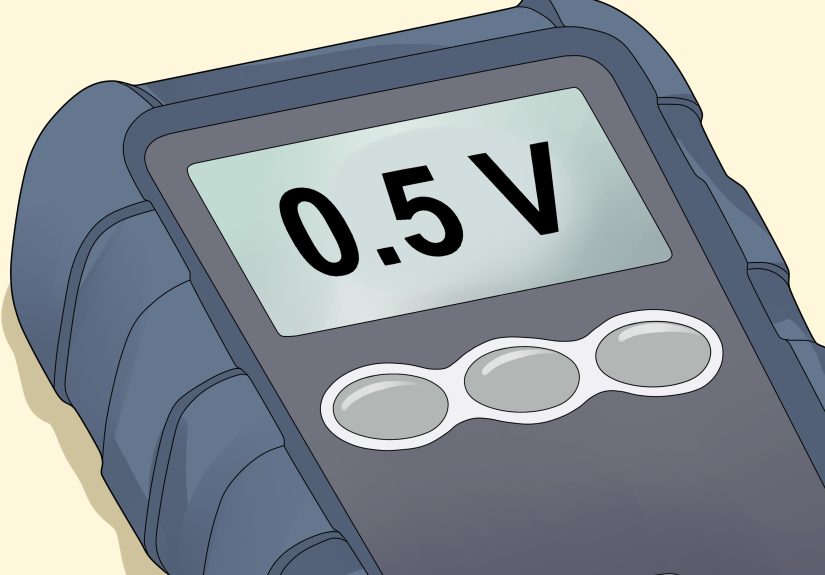
Set your multimeter to DC volts. Place the red lead on the positive battery post and the black lead on the negative battery post. A fully charged 12-volt car battery usually reads around 12.6 volts with the engine off. A reading around 12.4 volts can still be usable, but if the battery is much lower, charge it before continuing. If the voltage is below about 12 volts, the battery may be too weak to energize the solenoid and crank the starter reliably.
Now watch voltage while someone tries to crank the engine. If the voltage drops extremely low during the start attempt, the battery may be weak, discharged, or internally damaged. In that case, charging or load-testing the battery comes before condemning the starter solenoid.
Step 2: Inspect Battery Terminals and Cables
Look for corrosion, loose clamps, frayed cables, damaged insulation, or greenish-white buildup around the terminals. Corrosion adds resistance, and resistance is the villain in starter circuits. A starter motor needs a strong flow of current. Even a small amount of bad connection can create a big no-crank headache.
Clean and tighten the battery terminals if needed. Also inspect the positive cable going to the starter solenoid and the ground cable between the battery, body, and engine block. A bad engine ground can mimic a bad solenoid because the starter circuit needs a complete path back to the battery.
Step 3: Perform a Simple Voltage Drop Check
A voltage drop test helps find resistance hidden inside cables or connections. Put one meter lead on the battery positive post and the other on the large battery terminal at the starter solenoid. Have a helper turn the key to Start for only a few seconds. A high voltage reading during cranking means power is being lost between the battery and the solenoid. Repeat a similar test on the ground side by measuring between the negative battery post and a clean metal point on the starter housing or engine block.
If cleaning and tightening the cables changes the symptom, you may have found the real problem. Many “bad starter solenoids” are simply dirty connections wearing a fake mustache.
Way 2: Test the Solenoid Control Signal
The second way to test a starter solenoid is to check whether the solenoid receives the command to operate. This test focuses on the small terminal, often called the S terminal or start terminal. If the solenoid never receives power at this terminal, it cannot engage, no matter how new or shiny it looks.
How to Test the Start Signal
Set your multimeter to DC volts. Connect the black meter lead to a clean ground, such as the negative battery post or bare metal on the engine block. Touch the red lead to the small start terminal on the solenoid. Have a helper turn the key to the Start position or press the start button while the brake or clutch is applied as required by the vehicle.
You should see battery voltage, or close to it, when the key is held in the Start position. If you see good voltage at the control terminal and hear a solid click, the solenoid coil is likely being energized. If there is no voltage at the small terminal, the problem is probably upstream.
What If There Is No Control Voltage?
No voltage at the solenoid’s control terminal can point to several issues: a blown starter fuse, faulty starter relay, bad ignition switch, failed neutral safety switch, clutch switch problem, loose connector, damaged wiring, or a security system issue. On modern vehicles, the engine control module may also be involved in starter authorization.
This is where patience saves money. If the solenoid is not receiving the start signal, replacing the starter may not fix anything. You would simply own a new starter and the same old silence. Follow the circuit from the battery to the fuse, relay, switch, safety interlock, and solenoid trigger wire. A wiring diagram for your vehicle can make this step much easier.
What If There Is Control Voltage but No Click?
If the small terminal receives proper voltage but the solenoid does not click or move, the solenoid coil may be open, internally damaged, poorly grounded, or mechanically stuck. Some starter-mounted solenoids ground through the starter housing, so rust, loose mounting bolts, or poor engine ground connections can interfere with operation. On a remote solenoid, make sure the solenoid body or ground terminal has a clean path to ground.
Way 3: Test Solenoid Output to the Starter Motor
The third way to test a starter solenoid is to check whether it passes battery power to the starter motor when commanded. This is the test that often separates a bad solenoid from a bad starter motor.
Check the Large Battery Terminal
First, confirm that the large battery-side terminal on the solenoid has battery voltage at all times. Put the red meter lead on the large input terminal and the black lead on ground. You should read battery voltage. If you do not, the battery cable, fusible link, connection, or battery itself may be the problem.
Check the Output Terminal While Cranking
Next, move the red lead to the solenoid output terminalthe large terminal or cable that feeds the starter motor. Have your helper turn the key to Start. If the solenoid receives control voltage and clicks, but the output terminal does not show battery voltage, the internal solenoid contacts may be burned, pitted, or stuck. That usually means the solenoid or starter assembly needs replacement, depending on the design.
If the output terminal shows strong voltage but the starter motor does not crank, the solenoid may be doing its job and the starter motor may be faulty. The issue could also be a seized engine, bad ground, damaged starter brushes, worn commutator, or mechanical binding in the starter drive.
Listen to the Sound
Sound can support your diagnosis, although it should not be the only evidence. A single heavy click with no crank often suggests the solenoid is trying but the high-current side is not doing its job. A rapid machine-gun clicking sound often suggests voltage collapses under load. A whirring sound may mean the starter spins but does not engage the flywheel, which can point to a starter drive or solenoid engagement problem.
About Bench Testing
Bench testing a starter and solenoid can confirm operation after the unit is removed from the vehicle, but it should be done carefully. A starter can twist or jump when powered. If you bench test, the starter must be secured, the battery or jump pack must be connected correctly, and sparks must be kept away from fuel vapors. For many DIYers, removing the starter and having it tested at an auto parts store or repair shop is safer and more reliable.
How to Read Your Test Results
Scenario 1: Battery Voltage Is Low
If battery voltage is low before testing, charge and retest the battery. A weak battery can cause clicking, slow cranking, or no cranking at all. Do not diagnose the solenoid until the battery is known to be healthy.
Scenario 2: Battery Is Good but No Signal Reaches the Solenoid
If the large solenoid terminal has battery voltage but the small start terminal does not receive voltage during cranking, look upstream. The likely suspects are the starter relay, ignition switch, neutral safety switch, clutch switch, fuse, wiring, or anti-theft system.
Scenario 3: Signal Reaches the Solenoid but Output Is Missing
If the solenoid receives a start signal but does not send power to the starter motor, the solenoid contacts may be bad. On many vehicles, the solenoid is part of the starter assembly, so replacement often means replacing the starter.
Scenario 4: Output Is Good but the Starter Does Not Crank
If voltage reaches the starter motor but it does not turn, suspect the starter motor itself, a poor ground, or a mechanical problem. Before replacing parts, check the ground path and make sure the engine is not locked or jammed.
Common Mistakes When Testing a Starter Solenoid
The biggest mistake is replacing the starter without testing the battery. A discharged battery is the master of disguise. It can make relays chatter, solenoids click, lights dim, and owners sigh deeply into the morning air.
Another common mistake is testing voltage without testing under load. A cable may show 12 volts with no load but fail when the starter demands high current. That is why voltage drop testing during a crank attempt is so useful.
DIYers also sometimes ignore the ground side of the circuit. Electricity needs a full loop. A clean positive cable is only half the story. A loose engine ground strap can stop a starter just as effectively as a bad positive cable.
Finally, avoid assuming every click means the same thing. A single click, rapid clicking, a faint click, and a spinning whir each point in different directions. Treat the sound as a clue, not a verdict.
When Should You Replace the Starter Solenoid?
You should consider replacing the starter solenoid or starter assembly when testing confirms that the solenoid receives proper control voltage and battery power but fails to pass power to the starter motor. Replacement is also likely if the solenoid sticks, works intermittently after the battery and wiring are verified, or the starter drive fails to engage because the solenoid mechanism is worn.
On many modern vehicles, the solenoid is integrated with the starter motor. In that case, replacing only the solenoid may not be practical or cost-effective. On some older vehicles and equipment, a remote solenoid can be replaced separately. Always match the replacement part to the exact vehicle year, make, model, engine, and transmission configuration.
Extra Experience: Real-World Lessons From Testing Starter Solenoids
One useful experience from starter solenoid diagnosis is that the “obvious” answer is often wrong. A car that makes one click and refuses to crank seems like a textbook bad starter solenoid, but the actual problem may be a loose battery terminal. In one common driveway scenario, the dashboard lights come on, the radio plays, and the owner assumes the battery is fine. Then the key is turned, the solenoid clicks, and everything goes dark. That is often a poor connection or weak battery collapsing under load. Small electronics can run on weak power; a starter motor cannot.
Another lesson is that corrosion can hide where you least expect it. Battery terminals may look clean from above, but the contact surface inside the clamp can be crusty. Ground straps can look connected but be loose, rusted, or broken under the insulation. The cable at the starter may be oily, heat-damaged, or barely hanging on. A starter circuit lives in a harsh neighborhood: heat, vibration, road splash, oil, and time all show up like uninvited guests.
Testing also teaches you to respect voltage drop. Many beginners look for 12 volts and stop there. But starter circuits are high-current circuits, and high resistance may only reveal itself when the circuit is under load. That is why a meter reading can look normal until someone turns the key. When the starter tries to pull current, the weak connection finally confesses. A voltage drop test is like asking the circuit to perform under pressure instead of answering easy questions on a sunny day.
Intermittent solenoid problems can be especially annoying. A vehicle may start perfectly ten times and then fail on the eleventh. Heat soak can make this worse. After a long drive, under-hood temperatures rise, resistance increases, and a worn solenoid or starter may refuse to cooperate. Then, after cooling down, it starts again as if nothing happened. This is when careful notes help: record whether the problem happens hot or cold, whether you hear a click, whether lights dim, and whether tapping or moving cables changes anything.
In older vehicles with remote solenoids, the solenoid may be easier to access and test. In newer vehicles, access can be tighter than a parking spot at a holiday shopping mall. Sometimes the starter is buried under intake parts, splash shields, or exhaust components. In those cases, testing at accessible relay points or using a wiring diagram can save time. The goal is not to wrestle the starter out first; the goal is to prove the fault before grabbing tools with dramatic background music playing in your head.
A final practical tip: do not ignore the human side of diagnosis. Ask what happened before the no-start problem appeared. Was the battery recently replaced? Was the vehicle washed? Did someone install an alarm, audio system, remote starter, or new battery cable? Did the problem begin after a cold night or after sitting for weeks? These details can point you toward the real issue faster than random part swapping.
Testing a starter solenoid is not about being fancy. It is about being systematic. Start with battery health, inspect connections, confirm the control signal, then confirm output to the starter motor. That sequence prevents expensive guesses and turns a stressful no-start situation into a logical checklist. And when the engine finally cranks, you get one of life’s small but deeply satisfying victories: the sound of a problem solved.
Conclusion
Learning how to test a starter solenoid can save time, money, and unnecessary frustration. The three best methods are simple but powerful: test the battery and connections, test the solenoid control signal, and test solenoid output to the starter motor. Together, these checks help you determine whether the solenoid is actually bad or whether another part of the starting system is causing the trouble.
The main rule is to diagnose in order. A starter solenoid depends on a strong battery, clean cables, good grounds, a working relay, and a proper start signal. Skip those basics and you may replace a good starter. Follow the process and you can make a smart repair decision with confidence.
Note: Starter circuits can produce sparks and sudden movement. If you are unsure about any test, get help from a qualified mechanic or experienced adult before continuing.







 Close
Close