
Table of Contents >> Show >> Hide
- The Headline Is True-ish, and the “Ish” Matters
- Why Gene Hackman Was a Tempting Choice
- Why the Studio Said No
- Robert Reed Was the Right Wrong Man for the Job
- How a Hackman Version of Mike Brady Might Have Changed the Show
- Why This Story Still Hooks Fans Decades Later
- The Viewing Experience of a Hollywood “What If”
- Conclusion
Every great TV show has its own weird little alternate universe. Superman nearly had a different cape. Classic sitcoms almost had different stars. And in one of the more delicious “wait, what?” casting stories in television history, Gene Hackman was once floated as a possible Mike Brady on The Brady Bunch.
Yes, that Gene Hackman. The future Oscar winner. The guy who would become one of the toughest, smartest, most magnetic screen actors of his era was, for one strange moment in Hollywood development-land, connected to the role of America’s squarest and most dependable TV dad. It sounds like a prank cooked up in a writers’ room after too much coffee and one too many reruns. But like many famous entertainment stories, the truth is a little messier, a little funnier, and a lot more interesting than the headline alone.
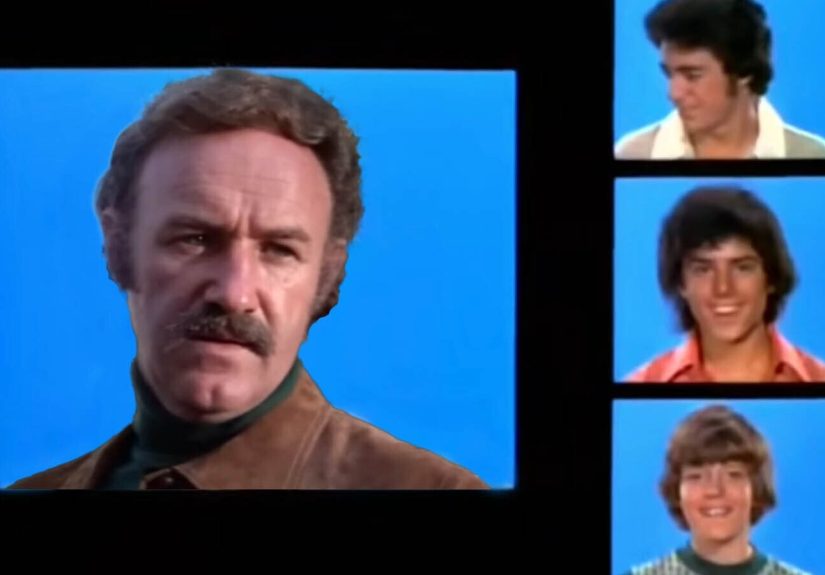
The short version is this: Hackman was not standing on the Brady staircase waiting for his mark, but he was on creator Sherwood Schwartz’s radar during the casting process. Studio and network decision-makers, however, were not sold. They wanted a steadier television presence, someone who could make viewers instantly buy the image of a middle-class suburban father with a blueprint in one hand and a life lesson in the other. That man ended up being Robert Reed.
And honestly? That choice changed television history.
The Headline Is True-ish, and the “Ish” Matters
Let’s clear the avocado-green air first. Saying “Gene Hackman almost played the dad on The Brady Bunch” makes for a great headline because it is surprising, dramatic, and just absurd enough to make people click. But the fuller version is more nuanced. Hackman was apparently on Sherwood Schwartz’s wish list for the role of Mike Brady, not a signed-and-sealed near-cast whose wardrobe was already being hemmed.
That distinction matters because Hollywood “almosts” come in levels. There is “they dreamed about it over lunch.” There is “an agent made a call.” There is “a meeting happened.” And then there is “the contract was basically in the mail.” Hackman seems to belong in the earlier part of that spectrum. He was admired, discussed, and considered promising, but the people holding the money and the final green light were not eager to gamble on him as the face of a family sitcom.
At the time, that hesitation made business sense. In hindsight, it feels like the entertainment equivalent of refusing to invest in beachfront property because the sand looks suspicious.
What makes the story fascinating is not just that Hackman was mentioned. It is that the idea even seemed plausible to someone in the room. That tells us a lot about where Hackman’s career stood in the late 1960s, what kind of tone Schwartz may have initially imagined, and how much a single casting choice can nudge a show toward either cozy pop-culture immortality or a completely different vibe.
Why Gene Hackman Was a Tempting Choice
Before Gene Hackman became the Gene Hackman of legend, he was something even more useful to producers: a hungry, respected actor on the rise. By the late 1960s, he had already started building serious momentum. He had film credibility, dramatic muscle, and the kind of face that looked lived-in rather than lacquered. He was not a polished fantasy dad. He was a human being with edges.
That was probably part of the appeal. Mike Brady was written as a widowed architect with three sons, a man entering a blended family situation that could have been played with more realism than the series eventually embraced. If you imagine Hackman in that setup, you can see why the idea might have intrigued Schwartz. Hackman had authority without stiffness. He could be warm without becoming syrupy. He could suggest intelligence, fatigue, humor, and emotional history all at once. Put another way: he looked like a man who had definitely paid taxes.
That quality would soon become central to his stardom. Hackman never felt like a decorative leading man. He felt like somebody who had seen a few things and might have opinions about the pipes under your sink. Even when he played heroes, there was grit in the machinery. Even when he played villains, he brought intelligence and unpredictability. He was not made of sitcom fluff.
And that is exactly why the Brady possibility remains such a juicy Hollywood footnote. It reveals that, for a split second, a future giant of New Hollywood and a candy-colored family sitcom occupied the same sentence.
Why the Studio Said No
Television executives in 1968 were not shopping for irony. They were shopping for reassurance.
Hackman may have impressed creatives, but executives reportedly worried that TV audiences would not know who he was. His film career had not yet exploded into full superstardom. He had talent, yes. Respect, yes. A household-name television identity? Not so much. And in network television, especially on a concept-driven family sitcom, familiarity was a kind of currency.
That helps explain why the eventual choice landed on Robert Reed, an actor viewers already knew from The Defenders. Reed had dramatic credibility and television recognition. He looked polished enough to fit the Brady house, but substantial enough to give the role some authority. In executive terms, he was likely the safer bet. In casting terms, he was the compromise that looked, on camera, like destiny.
Studios also tend to fear tonal confusion. Hackman’s energy, even then, may have seemed too intense, too grounded, too potentially interesting for a sitcom that would become famous for football-to-the-nose chaos, sibling rivalries, and lessons wrapped up before the credits rolled. Reed, by contrast, could project stability. He looked like he belonged in a split-level house with orange accents and an extremely patient housekeeper.
Sometimes a rejection says as much about a project as it does about the actor. In this case, passing on Hackman signaled that The Brady Bunch was not aiming for complicated realism. It was aiming for broad comfort, tidy sentiment, and a father figure who could function as a moral metronome.
Robert Reed Was the Right Wrong Man for the Job
Robert Reed is one of those classic television paradoxes: he was ideal for the role, and he was often unhappy in it.
On screen, Reed gave Mike Brady composure, intelligence, and a sincere fatherly presence. He could deliver those weekly little speeches without sounding like a walking greeting card. He carried himself like a man who probably knew where the circuit breaker was and had strong opinions about proper drafting tools. Viewers believed him as a dad because he seemed competent, not performatively cuddly.
Off screen, Reed famously clashed with Sherwood Schwartz over scripts and tone. He had serious acting instincts and wanted stronger material. He was not always thrilled to be the patriarch of a relentlessly wholesome sitcom. Yet that tension may have accidentally helped the show. Reed gave Mike Brady a slight undercurrent of gravitas that kept the character from floating away like a balloon at a suburban parade.
In other words, Reed brought just enough adult steel to make all the sweetness go down easier.
The irony is rich enough to butter toast: the actor who was not fully happy with the role became essential to why the role worked. If Mike Brady had been played as pure vanilla, the series might have tipped into full cartoon. Reed kept it grounded. He made the father figure believable even when the plots were frothy. That is not a small contribution. That is structural engineering. Mike Brady would appreciate the metaphor.
How a Hackman Version of Mike Brady Might Have Changed the Show
Now for the fun part: informed speculation.
If Gene Hackman had somehow landed the role, The Brady Bunch might still have succeeded. Great actors can do surprising things. But it almost certainly would have felt different. Hackman’s presence tends to pull scenes toward realism. Even when he was being funny, there was a current of unpredictability beneath the surface. He made you lean in. Reed, by contrast, made you settle in.
A Hackman-led Brady household might have had a little more friction, a little more lived-in texture, and a little less polished reassurance. The father might have felt less like a weekly lecturer and more like a man improvising his way through a complex family merger. The comedy could have become sharper. The warmth might have been harder-earned. The whole show could have tilted closer to dramedy before television really had a common label for that kind of tone.
Would that have been better? Not necessarily. Just different.
Part of the enduring charm of The Brady Bunch is that it is not trying to be raw or jagged. It is aspirational in a distinctly TV way. Problems arrive, feelings are bruised, somebody learns a lesson, and by the end the family still feels like a soft landing spot. Reed fit that architecture. Hackman might have remodeled the place.
And once you start imagining it, it is hard to stop. Picture Hackman navigating the pilot. Picture him in the backyard dealing with Greg’s schemes. Picture him delivering a fatherly speech after one of Jan’s crises. Fascinating? Absolutely. Brady? Maybe not.
Why This Story Still Hooks Fans Decades Later
People love casting what-ifs because they let us peek at the fragile machinery behind pop culture. We tend to think iconic shows arrive fully formed, as if they were carved into stone tablets and lowered directly into prime time. In reality, they are bundles of near-misses, arguments, lucky breaks, scheduling accidents, and executive nerves.
The Hackman-Brady story survives because it contains all the ingredients of irresistible trivia. It involves a beloved sitcom, a towering movie star, a creator with ambition, executives with cold feet, and a result that now seems inevitable only because it happened. It reminds us that “iconic” usually starts out looking like “maybe.”
It also flatters the imagination. The minute someone hears that Gene Hackman was nearly connected to Mike Brady, the brain starts building scenes from an alternate timeline. That mental exercise is half the fun. The other half is realizing how much casting shapes cultural memory. We do not just remember plots. We remember faces, voices, rhythms, and the emotional weather performers bring into a room.
Mike Brady is not simply a character description. He is Robert Reed’s posture, cadence, and measured patience. Change the actor, and you do not just change the face of the father. You change the entire atmospheric pressure of the house.
The Viewing Experience of a Hollywood “What If”
For longtime fans, learning this story creates a very specific kind of whiplash. You remember the staircase, the theme song, the neat little life lessons, the unnaturally cooperative family rhythm, and then suddenly your brain has to make room for Gene Hackman. That is like finding out your childhood bicycle almost came with a jet engine. The object remains familiar, but the possibility is wildly destabilizing.
Part of the pleasure comes from revisiting the show with new eyes. Once you know the casting story, Mike Brady scenes start to feel slightly different. You notice how carefully Reed balances authority and gentleness. You notice that he is not playing the role as a joke. He is giving the show form. He is helping translate a potentially awkward premisea newly blended family in late-1960s Americainto something viewers could accept instantly. Even when the scripts got light, he played the father like a real grown-up. That steadiness is easy to miss because the series became so familiar. Familiarity is sneaky that way. It hides craftsmanship in plain sight.
There is also the nostalgic experience of how The Brady Bunch reached people in the first place. Many fans did not discover it during its original network run. They met the Bradys in reruns, after school, on weekends, in living rooms where the television was less a device than a family campfire. That context matters. In reruns, the show became comfort food. It was not simply a sitcom; it was an atmosphere. An actor who felt too volatile or too psychologically loaded at the center might have changed that comfort level. Reed’s version of Mike Brady helped make the series rewatchable in that uniquely cozy, syndicated way.
Then there is the deeper fan experience: realizing that television history is full of invisible forks in the road. Once you see one fork, you start imagining all of them. What if Joyce Bulifant had remained Carol Brady? What if the show had leaned harder into the blended-family tensions of the pilot? What if it had embraced more of the political chaos of its era instead of creating a suburban bubble? The Hackman anecdote becomes a gateway drug to understanding how delicate the final shape of any classic series really is.
That is why stories like this endure. They are not just trivia nuggets passed around by pop-culture obsessives at parties. They are reminders that the entertainment we treat as permanent was once uncertain, negotiable, and one nervous executive away from becoming something else. Fans feel that instinctively. They sense the alternate version hovering just offscreen.
And maybe that is the funniest part of all. Gene Hackman went on to become one of the great film actors of his generation. The Brady Bunch became one of the most recognizable family sitcoms ever made. Both outcomes now feel inevitable. But they were not inevitable then. For one brief, peculiar moment, American pop culture almost put Popeye Doyle in a suburban rec room to discuss sibling behavior. We lost the strangest crossover never made. We also got exactly the version of TV history we were apparently meant to have.
Conclusion
So, did Gene Hackman almost play the dad on The Brady Bunch? Sort of. Close enough to be true in spirit, not close enough to suggest he was one costume fitting away from saying, “Here’s the story.” He was admired, considered, and blocked before things could get serious. That alone is enough to make the story worth telling.
More importantly, the near-miss throws the eventual casting into sharper focus. Robert Reed was not just the man who got the role after somebody else did not. He helped define the emotional grammar of the series. His intelligence, restraint, and barely concealed seriousness gave Mike Brady shape, weight, and credibility. Without that, the show might still have been popular. With it, the show became iconic.
Hackman went on to conquer cinema. Reed became one of television’s most recognizable dads. In the end, everybody got the career they were supposed to have. Still, it is impossible not to smile at the idea that one of Hollywood’s greatest actors once brushed up against one of TV’s most earnest households. That is the magic of old casting stories: they remind us that entertainment history is built not just on what happened, but on all the gloriously weird things that almost did.





 Close
Close